Question Numbers (16 to 20): A speciality supermarket sells 320 products. Each of these products was either a cosmetic product or a nutrition product. Each of these products was also either a foreign product or a domestic product. Each of these products had at least one of the two approvals – FDA or EU.
The following facts are also known:
1. There were equal numbers of domestic and foreign products.
2. Half of the domestic products were FDA approved cosmetic products.
3. None of the foreign products had both the approvals, while 60 domestic products had both the approvals.
4. There were 140 nutrition products, half of them were foreign products.
5. There were 200 FDA approved products. 70 of them were foreign products and 120 of them were cosmetic products.
Q. 16 How many foreign products were FDA approved cosmetic products?
Explanation
Correct answer-40

It is given that the total number of products supermarket sells is 320. cosmetic + nutrition = foreign + domestic = FDA + EU = 320 products
In statement 1, it is given that the number of foreign products is equal to the number of domestic products. Foreign products = Domestic products = 320/2 = 160
In statement 2, it is given that half of the domestic products were FDA approved cosmetic products, i.e. domestic, cosmetic and FDA = 80
In statement 4, it is given that there were 140 nutrition products, half of them were foreign products. This implies remaining half are domestic.
In statement 5, it is given that there are 200 FDA approved products out of which 70 are foreign products and 120 are cosmetic products. If 70 are foreign products, remaining 130 should be domestic products. In domestic products, FDA approved cosmetic products are 80. This implies FDA approved nutrition products are 130-80, i.e. 50.
There are 120 FDA approved cosmetic products. Domestic, cosmetic and FDA approved = 80 This implies, Foreign, cosmetic and FDA approved is 120-80, i.e. 40. There are 70 FDA approved foreign products. This implies Foreign, nutrition and FDA approved is 70-40, i.e. 30.

40 foreign products were FDA approved cosmetic products.
Q. 17 How many cosmetic products did not have FDA approval?
1) 60
2) 10
3) 50
4) Cannot be determined
Explanation
Correct answer- 1
60 cosmetic products did not have FDA approval.
It is given that the total number of products supermarket sells is 320. cosmetic + nutrition = foreign + domestic = FDA + EU = 320 products
In statement 1, it is given that the number of foreign products is equal to the number of domestic products. Foreign products = Domestic products = 320/2 = 160
In statement 2, it is given that half of the domestic products were FDA approved cosmetic products, i.e. domestic, cosmetic and FDA = 80
In statement 4, it is given that there were 140 nutrition products, half of them were foreign products. This implies remaining half are domestic.
In statement 5, it is given that there are 200 FDA approved products out of which 70 are foreign products and 120 are cosmetic products. If 70 are foreign products, remaining 130 should be domestic products. In domestic products, FDA approved cosmetic products are 80. This implies FDA approved nutrition products are 130-80, i.e. 50.
There are 120 FDA approved cosmetic products. Domestic, cosmetic and FDA approved = 80 This implies, Foreign, cosmetic and FDA approved is 120-80, i.e. 40. There are 70 FDA approved foreign products. This implies Foreign, nutrition and FDA approved is 70-40, i.e. 30.
Q. 18 Which among the following options best represents the number of domestic cosmetic products that had both the approvals?
1) At least 20 and at most 50
2) At least 10 and at most 80
3) At least 20 and at most 70
4) At least 10 and at most 60
Explanation
Since a + x = 80 and x + y = 60
Therefore, x can be maximum 60.
and because b + y = 50, y can be 50 max,
which implies b can be 0, x can be 10, a can be minimum 70.
So x can be at least 10 and at most 60.
Correct answer-40
It is given that the total number of products supermarket sells is 320. cosmetic + nutrition = foreign + domestic = FDA + EU = 320 products
In statement 1, it is given that the number of foreign products is equal to the number of domestic products. Foreign products = Domestic products = 320/2 = 160
In statement 2, it is given that half of the domestic products were FDA approved cosmetic products, i.e. domestic, cosmetic and FDA = 80
In statement 4, it is given that there were 140 nutrition products, half of them were foreign products. This implies remaining half are domestic.
In statement 5, it is given that there are 200 FDA approved products out of which 70 are foreign products and 120 are cosmetic products. If 70 are foreign products, remaining 130 should be domestic products. In domestic products, FDA approved cosmetic products are 80. This implies FDA approved nutrition products are 130-80, i.e. 50.
There are 120 FDA approved cosmetic products. Domestic, cosmetic and FDA approved = 80 This implies, Foreign, cosmetic and FDA approved is 120-80, i.e. 40. There are 70 FDA approved foreign products. This implies Foreign, nutrition and FDA approved is 70-40, i.e. 30.
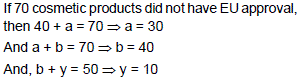
Q. 19 If 70 cosmetic products did not have EU approval, then how many nutrition products had both the approvals?
1) 20
2) 30
3) 50
4) 10
Explanation
Correct answer – 4
It is given that the total number of products supermarket sells is 320. cosmetic + nutrition = foreign + domestic = FDA + EU = 320 products
In statement 1, it is given that the number of foreign products is equal to the number of domestic products. Foreign products = Domestic products = 320/2 = 160
In statement 2, it is given that half of the domestic products were FDA approved cosmetic products, i.e. domestic, cosmetic and FDA = 80
In statement 4, it is given that there were 140 nutrition products, half of them were foreign products. This implies remaining half are domestic.
In statement 5, it is given that there are 200 FDA approved products out of which 70 are foreign products and 120 are cosmetic products. If 70 are foreign products, remaining 130 should be domestic products. In domestic products, FDA approved cosmetic products are 80. This implies FDA approved nutrition products are 130-80, i.e. 50.
There are 120 FDA approved cosmetic products. Domestic, cosmetic and FDA approved = 80 This implies, Foreign, cosmetic and FDA approved is 120-80, i.e. 40. There are 70 FDA approved foreign products. This implies Foreign, nutrition and FDA approved is 70-40, i.e. 30.
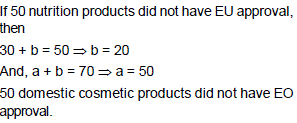
Q. 20 If 50 nutrition products did not have EU approval, then how many domestic cosmetic products did not have EU approval?
Explanation
It is given that the total number of products supermarket sells is 320. cosmetic + nutrition = foreign + domestic = FDA + EU = 320 products
In statement 1, it is given that the number of foreign products is equal to the number of domestic products. Foreign products = Domestic products = 320/2 = 160
In statement 2, it is given that half of the domestic products were FDA approved cosmetic products, i.e. domestic, cosmetic and FDA = 80
In statement 4, it is given that there were 140 nutrition products, half of them were foreign products. This implies remaining half are domestic.
In statement 5, it is given that there are 200 FDA approved products out of which 70 are foreign products and 120 are cosmetic products. If 70 are foreign products, remaining 130 should be domestic products. In domestic products, FDA approved cosmetic products are 80. This implies FDA approved nutrition products are 130-80, i.e. 50.
There are 120 FDA approved cosmetic products. Domestic, cosmetic and FDA approved = 80 This implies, Foreign, cosmetic and FDA approved is 120-80, i.e. 40. There are 70 FDA approved foreign products. This implies Foreign, nutrition and FDA approved is 70-40, i.e. 30.
Correct answer- 50